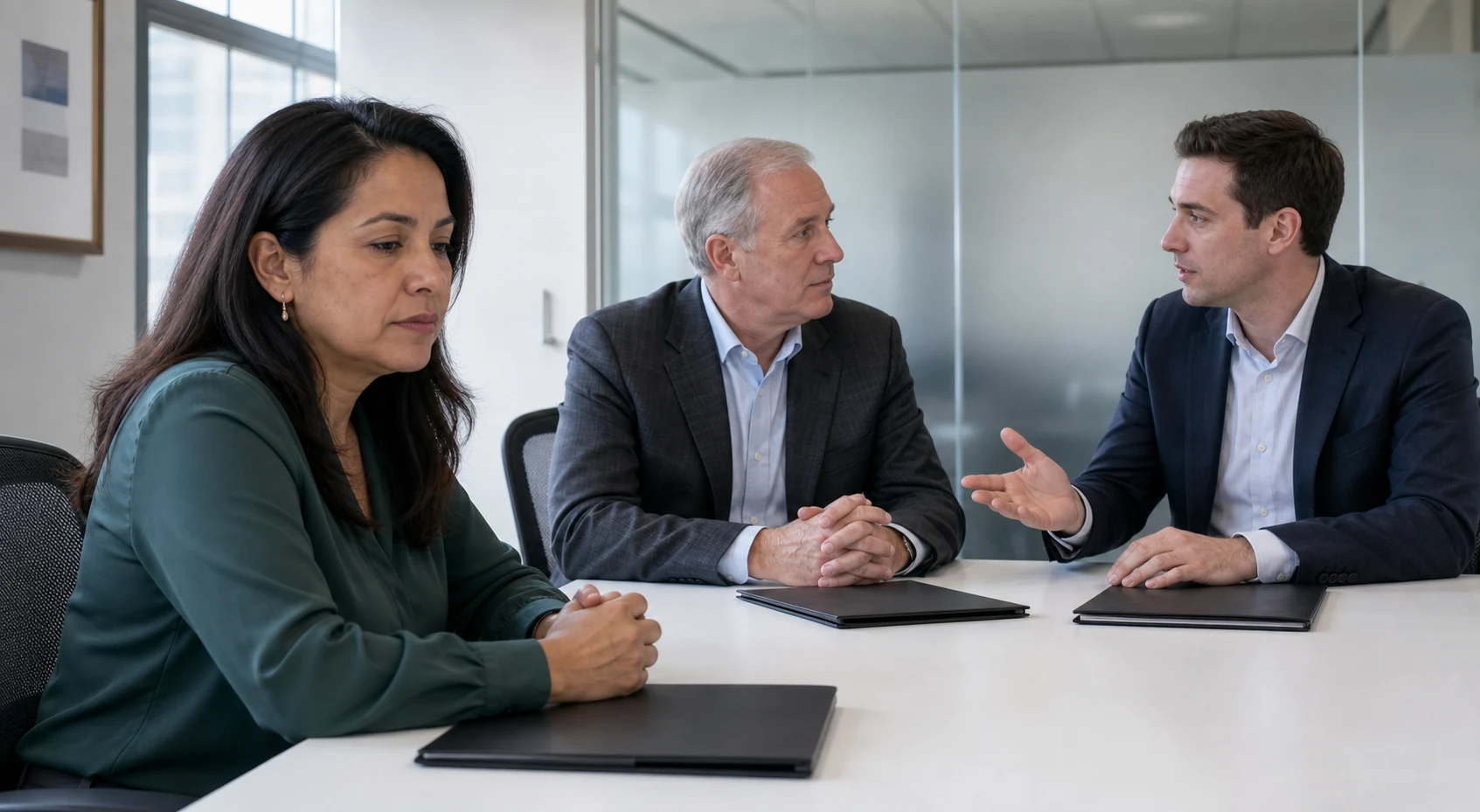
A transition affects more than the owner.
A change in ownership naturally raises questions about jobs, reporting lines, clients, and the pace of change. We answer the first question directly: every existing position carries into the new ownership.
We retain every existing position through the change in ownership. You know the clients, the deadlines, and the way the firm really works—and that knowledge belongs in the future of the business.

Client knowledge, operating judgment, and the routines that keep work moving often sit with people beyond the founder. A responsible transition starts by seeing where that knowledge lives.
A change in ownership naturally raises questions about jobs, reporting lines, clients, and the pace of change. We answer the first question directly: every existing position carries into the new ownership.

The transition plan starts with the team in place. We map client relationships, responsibilities, and operating knowledge, then invest in the people and support the firm needs to become stronger over time.
Licensing rules can prevent an EA, manager, or other essential team member from holding shares directly. Our structure is built so the people who create the value share in the value, license or no license. The exact form follows applicable professional rules.
Systems and workflows will improve over time. We use technology to remove repetitive work, make service more reliable, and give the team more room for judgment and client relationships—not to justify acquisition-related job cuts.
Our commitment to retain every existing position is firm. The answers to these role-level questions are worked through in the actual transition plan.
Read the direct answers